
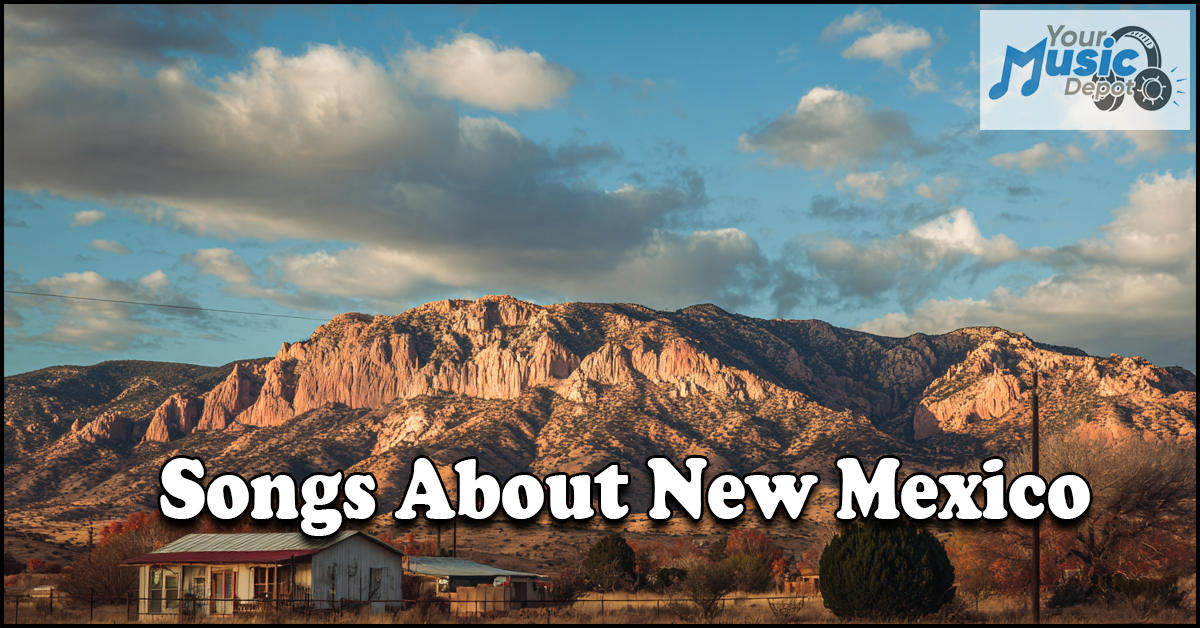
Songs About New Mexico celebrate the enchanting beauty and rich cultural heritage of the Land of Enchantment. From the desert landscapes of the Chihuahuan Desert to the snow-capped peaks of the Sangre de Cristo Mountains, New Mexico has inspired countless musicians to capture its mystique in song.
First Posted July 22, 2025 | Last Updated on March 31, 2026 by Ryan ConlonThe state’s unique blend of Native American, Hispanic, and Anglo cultures creates a musical tapestry unlike anywhere else in America. Artists from folk to country to indie rock have found inspiration in New Mexico’s ancient pueblos, vast mesas, and the magical light that bathes the high desert.
TL;DR
- Over 50 notable songs reference New Mexico, with “Santa Fe” by Bob Dylan being one of the most famous tributes.
- The state appears in songs across 8+ genres, from Neil Young’s folk rock to traditional mariachi ballads.
- Albuquerque and Santa Fe are mentioned in more than 30 songs combined, making them the most musically celebrated cities in the state.
- Native American flute music and Hispanic folk traditions heavily influence New Mexico-themed songs, creating a distinctive Southwestern sound.
Songs About New Mexico
New Mexico’s musical legacy spans decades and crosses multiple genres. The state’s dramatic landscapes and multicultural heritage provide endless inspiration for songwriters seeking to capture the Southwest’s essence, much like the diverse collection found in songs about places around the world.
From the haunting beauty of White Sands to the artistic communities of Taos, these songs paint vivid pictures of a land where ancient and modern cultures blend seamlessly. Many artists have found that New Mexico’s high desert environment offers a spiritual quality that translates beautifully into music.
Classic Country Songs About New Mexico
Country music has long celebrated the American Southwest, and New Mexico holds a special place in the genre. These songs often focus on themes of freedom, wide open spaces, and the cowboy lifestyle that still thrives in parts of the state, similar to the themes explored in songs about Montana and other Western states.
- “New Mexico” by Johnny Cash – A haunting ballad about love and loss set against the desert backdrop.
- “Albuquerque” by Neil Young – An epic 11-minute journey through heartbreak and redemption.
- “Santa Fe” by Bob Dylan – A poetic tribute to the artistic capital of the Southwest.
- “Roswell” by Brad Paisley – A playful song referencing the famous UFO incident.
- “Taos Moon” by Chris LeDoux – Captures the mystical quality of northern New Mexico.
Folk and Indie Tributes
Folk musicians have always been drawn to New Mexico’s storytelling traditions and cultural depth. The state’s history of folk music, from Native American songs to Hispanic ballads, creates rich source material for contemporary artists.
- “New Mexico” by The Gourds – A rollicking folk tune celebrating state pride.
- “Santa Fe Trail” by Grover Washington Jr. – An instrumental jazz piece evoking the historic trade route.
- “Four Corners” by Lyle Lovett – References New Mexico’s unique geographic position.
- “Land of Enchantment” by Bright Eyes – A melancholic indie folk exploration of the state’s nickname.
Rock and Alternative Songs
Rock artists have found New Mexico’s rebellious spirit and artistic communities particularly inspiring. The state’s connection to artists like Georgia O’Keeffe and its reputation as a haven for creative types resonates with rock musicians.
Many of these songs capture the sense of escape and transformation that people often experience when they encounter New Mexico’s distinctive culture and landscape.
- “Albuquerque” by “Weird Al” Yankovic – A humorous 11-minute epic parodying Neil Young’s song.
- “New Mexico” by The Shins – An introspective indie rock piece about personal transformation.
- “Santa Fe” by Beirut – Incorporates mariachi influences in an indie folk arrangement.
- “Roswell That Ends Well” by Marcy Playground – A psychedelic rock song inspired by UFO culture.
Musical Exploration Tip
Create a New Mexico playlist mixing these songs with traditional Native American flute music and Hispanic folk songs. This combination captures the full spectrum of the state’s musical heritage.
Songs Celebrating Specific New Mexico Cities
Different cities in New Mexico have inspired their own musical tributes, each capturing unique characteristics and cultural elements. From the artistic haven of Santa Fe to the quirky charm of Roswell, these locations offer distinct musical inspiration.
Santa Fe Songs
As New Mexico’s capital and artistic center, Santa Fe appears in numerous songs that celebrate its adobe architecture, art galleries, and spiritual atmosphere. The city’s blend of Native American, Hispanic, and Anglo cultures creates a unique musical landscape.
- “Santa Fe” by Marty Robbins – A classic Western ballad about the historic city.
- “Streets of Santa Fe” by Randy Travis – Celebrates the city’s romantic atmosphere.
- “Santa Fe Sunrise” by Jimmy Buffett – Captures the magical quality of morning light in the high desert.
Albuquerque Anthems
New Mexico’s largest city has inspired songs ranging from serious folk ballads to comedic masterpieces. Albuquerque’s position along old Route 66 and its role as a crossroads of cultures make it a compelling subject for songwriters.
The city’s mix of modern urban life and traditional Southwestern culture provides rich material for artists exploring themes of change and continuity. Just as songs about Arizona often focus on desert landscapes, Albuquerque songs frequently reference the Rio Grande and the Sandia Mountains.
Native American and Hispanic Musical Influences
New Mexico’s musical identity is deeply rooted in its Native American and Hispanic heritage. Traditional songs from Pueblo tribes and Mexican folk ballads continue to influence contemporary music about the state.
These cultural influences appear in everything from the rhythmic patterns of modern songs to the instruments used in recordings. Many artists incorporate elements like Native American flutes, Spanish guitars, and traditional percussion to create an authentic Southwestern sound.
- Pueblo ceremonial songs – Ancient melodies that celebrate the land and seasons.
- Mexican corridos – Narrative ballads that tell stories of the borderland experience.
- Spanish folk songs – Traditional melodies brought by early settlers that still resonate today.
- Contemporary fusion – Modern artists blending traditional elements with rock, country, and folk styles.
Songs About New Mexico’s Natural Wonders
The state’s dramatic landscape features prominently in many musical tributes. From the otherworldly beauty of White Sands National Park to the mysterious depths of Carlsbad Caverns, New Mexico’s natural wonders provide endless inspiration.
These songs often focus on the transformative power of experiencing New Mexico’s unique geography. Artists frequently describe how the state’s high desert environment and dramatic sky affect both mood and perspective, similar to how songs about Colorado celebrate mountain landscapes.
- “White Sands” by Peter Rowan – An instrumental piece evoking the pristine gypsum dunes.
- “Sangre de Cristo” by Dave Alvin – Named for the mountain range that dominates northern New Mexico.
- “Rio Grande Valley” by Emmylou Harris – Celebrates the river that runs through the heart of the state.
- “High Desert” by Los Lobos – Captures the essence of New Mexico’s elevated plateau country.
Modern Artists and New Mexico
Contemporary musicians continue to find inspiration in New Mexico’s unique character. The state’s reputation as an artists’ retreat and its connection to alternative lifestyles attract musicians from across genres.
Many modern songs about New Mexico explore themes of escape, reinvention, and spiritual discovery. The state’s relatively small population and vast open spaces provide a sense of freedom that appeals to artists seeking creative inspiration, much like the wide-open feeling captured in songs about Wyoming.
Indie and Alternative Contributions
Indie rock and alternative artists have embraced New Mexico’s quirky culture and artistic heritage. These songs often focus on personal transformation and the search for authentic experiences in an increasingly digital world.
- “Albuquerque Morning” by The Flaming Lips – A psychedelic exploration of desert consciousness.
- “Ghost Ranch” by Iron & Wine – Named for Georgia O’Keeffe’s famous New Mexico retreat.
- “Breaking Bad Blues” – Various artists have created songs inspired by the hit TV show set in Albuquerque.
Frequently Asked Questions
What is the most famous song about New Mexico?
Neil Young’s “Albuquerque” is widely considered the most famous song about New Mexico, known for its epic 11-minute length and emotional depth. Bob Dylan’s “Santa Fe” is also highly regarded among folk music fans.
Why do so many songs reference Santa Fe specifically?
Santa Fe’s status as an artistic and cultural center, combined with its distinctive adobe architecture and spiritual atmosphere, makes it particularly appealing to songwriters. The city represents the quintessential New Mexico experience for many visitors and artists.
Are there any famous songs about Roswell?
Yes, several songs reference Roswell and its famous UFO incident, including tracks by Brad Paisley and Marcy Playground. The city’s association with extraterrestrial phenomena makes it a popular subject for both serious and humorous songs.
What musical genres most commonly feature New Mexico themes?
Country, folk, and indie rock are the most common genres for New Mexico-themed songs. The state’s cowboy heritage appeals to country artists, while its artistic communities and spiritual atmosphere attract folk and indie musicians, similar to the variety found in songs about Texas.
Do any songs incorporate traditional New Mexico musical styles?
Many contemporary songs about New Mexico incorporate elements from Native American and Hispanic musical traditions, including flute melodies, Spanish guitar techniques, and traditional rhythmic patterns. Artists like Los Lobos and various Pueblo musicians have been particularly influential in this fusion.
Final Thoughts
Songs About New Mexico capture the mystical beauty and cultural richness of a state that continues to inspire artists across all musical genres. From Neil Young’s epic “Albuquerque” to traditional Native American melodies, these songs reflect the diverse voices that call the Land of Enchantment home.
Whether you’re drawn to the high desert landscapes or the vibrant artistic communities, New Mexico’s musical tributes offer a perfect soundtrack for exploring this unique corner of America. Start with one of these classic songs and let the music guide you through the enchanting world of New Mexican culture and geography, or explore similar musical journeys through songs about Nevada to discover more Southwestern musical treasures.

Ryan Conlon is the owner and author of Your Music Depot, a go-to platform for music enthusiasts seeking curated song lists and artist insights.
Passionate about the intersection of music and storytelling, Ryan’s goal is to help people find the perfect song for every occasion, exploring how songs can capture emotions and memories.
Subscribe to Our Newsletter